


Delta P Hazards in Commercial Diving: The Invisible Killer
Learn how Delta ΔP (Differential Pressure) hazards occur in commercial diving, where they are commonly found, the risks they create, and the essential safety measures used to prevent accidents.
Essam Nashat
6/9/20262 min read
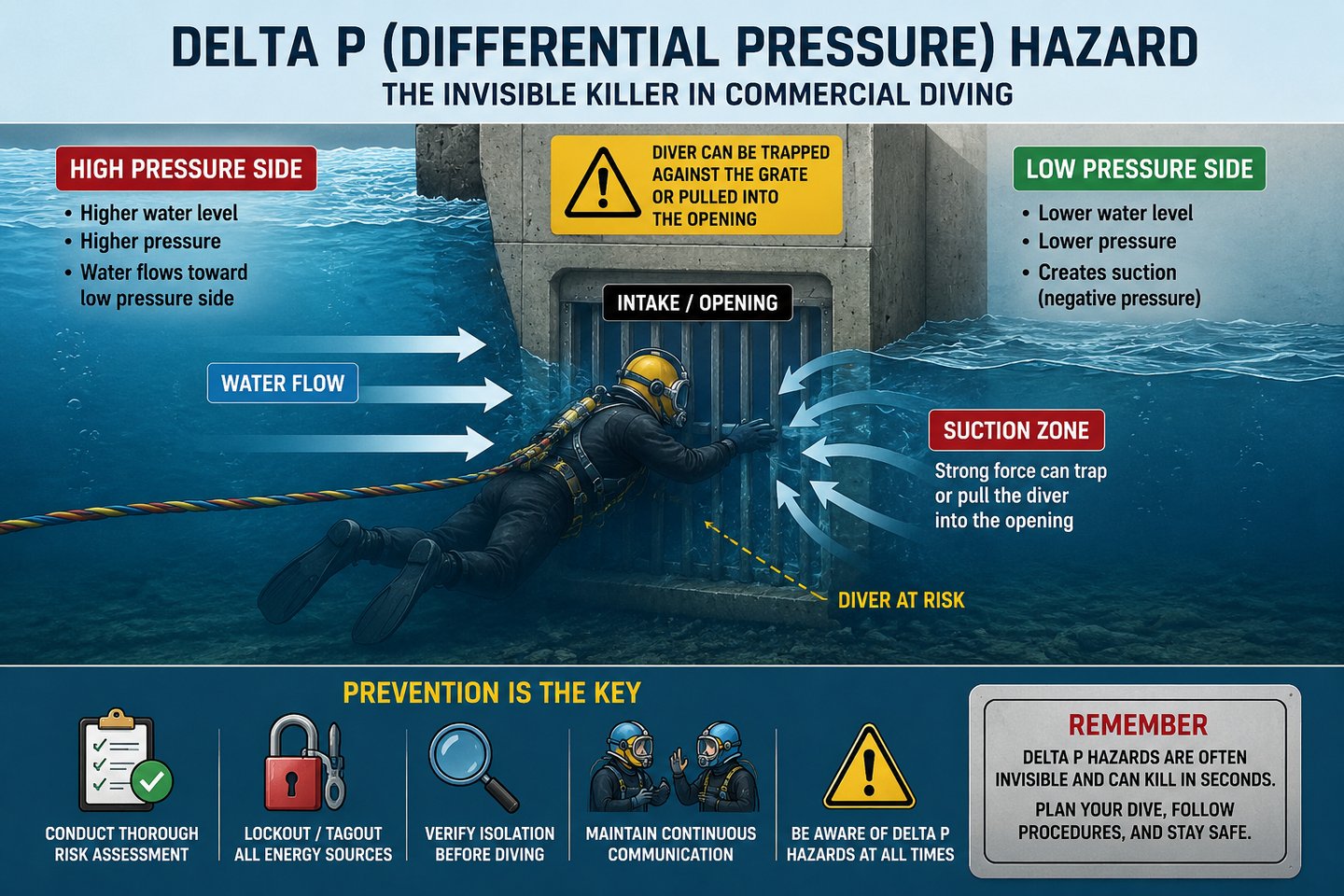
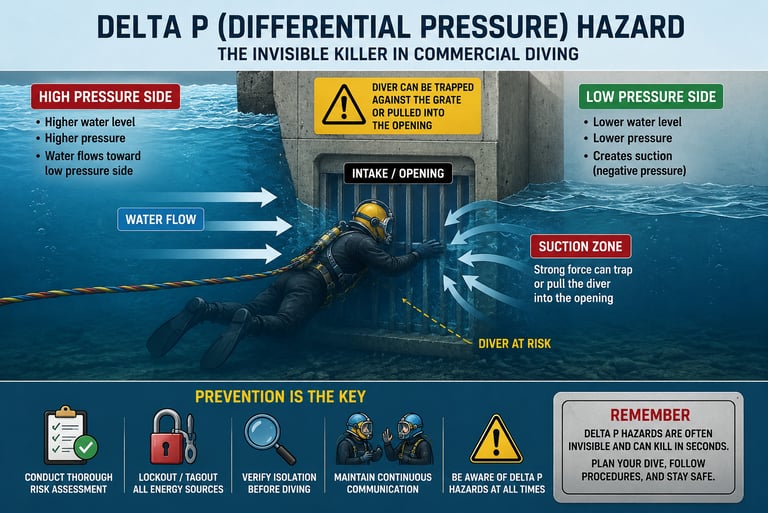
Delta P hazards are among the most dangerous risks in commercial diving operations. Also known as Differential Pressure Hazards, Delta P incidents occur when water moves between areas of different pressure, creating powerful forces that can trap, pin, or pull a diver toward an opening.
Many commercial diving accidents have been linked to Delta P conditions around water intake structures, dams, lock gates, pipelines, hydroelectric facilities, and industrial water systems. Because these hazards are often invisible underwater, divers may not recognize the danger until they are already affected.
Understanding Delta P hazards is essential for commercial diver safety. Proper risk assessment, isolation procedures, lockout/tagout practices, and supervisor awareness play a critical role in preventing serious injuries and fatalities.
What Is a Delta P Hazard?
A Delta ΔP Hazard (Differential Pressure Hazard) occurs when water moves between areas of different pressure through an opening or flow path. This pressure difference can generate powerful forces capable of trapping, pinning, or pulling a diver toward a structure.
Even a small pressure differential can create enough force to prevent a diver from escaping. Because Delta P hazards are often invisible underwater, they are considered one of the most dangerous risks in commercial diving operations.
Where Are Delta P Hazards Found?
Delta P hazards are commonly found near water intake structures, dams, lock gates, pump stations, pipelines, and cooling water systems. These locations can create dangerous pressure differences that generate strong suction forces capable of trapping a diver.
Because these hazards are often invisible underwater, commercial divers must identify potential Delta P sources before entering the water.
How Can Divers Stay Safe?
Delta P hazards are commonly found near water intake structures, dams, lock gates, pump stations, pipelines, and cooling water systems. These locations can create dangerous pressure differences that generate strong suction forces capable of trapping a diver.
Because these hazards are often invisible underwater, commercial divers must identify potential Delta P sources before entering the water.
Conclusion
Preventing Delta P accidents requires proper risk assessment, isolation of flow systems, lockout/tagout procedures, continuous communication, and strict supervision. Divers should never work near suspected pressure differentials unless the area has been verified safe.
Awareness, planning, and following established commercial diving procedures remain the most effective protection against Delta P hazards.
Contact
For training, technical support, diving consultancy, or course inquiries
© 2026 Captain Essam Nashat | Diving Education & Training.


Phone / WhatsApp